


Registered Voter Mailing List
The United States stands as one of the few nations with a deeply ingrained democratic system, where the power to choose leaders is vested directly in the hands of its citizens. From its founding, the country has embraced a form of governance where people, regardless of status, race, or wealth, have the right to vote on who will represent their interests. This commitment to democracy extends across all levels of governance, from local councils and county offices to state legislatures and the highest offices in the land. In this system, every citizen plays a role in shaping the direction of their communities and the nation as a whole, making the U.S. one of the few countries where democratic choice is not just an ideal but a reality at every level of government.
The cornerstone of this democracy is the electoral process, a massive and organized effort that brings together citizens, candidates, and campaign teams to ensure that voters are informed and that their voices are heard. Political campaigns are designed to generate awareness, foster engagement, and present candidates with detailed arguments about why they are the best choice for a particular position. Whether at the local level, such as selecting mayors or council members, or at the national level, choosing a president or members of Congress, elections in the U.S. are designed to be a fair and inclusive way for the public to make their voices known.
Election Day itself is a culmination of these efforts, where citizens come together to cast their ballots. While voting traditionally occurred in person at designated polling stations, recent reforms have significantly expanded access to the democratic process. Today, citizens can vote by mail, a development that allows individuals who face physical or logistical barriers to participate fully. For example, those who may be homebound due to medical conditions or disabilities no longer have to worry about traveling to a polling place, as they can mail in their ballots. Similarly, workers who may be unable to take time off during designated voting hours can cast their ballots by mail, ensuring their voices are still counted without jeopardizing their income.
This shift to greater accessibility is not just about convenience; it represents a further step toward making the electoral process more inclusive and equitable. By removing the barriers of physical voting locations and specific hours, the U.S. system allows more people to participate in choosing their leaders, regardless of their personal circumstances. This flexibility is vital in a democracy that thrives on citizen involvement, making it easier for everyone to exercise their right to vote and influence the future of the country.
The democratic process is a continual and evolving effort, one that requires active participation and preparation at every level. While the United States may be in a transitional period between national elections, with the next presidential race still on the horizon, the machinery of democracy never truly stops. Local, county, and state elections are regularly held, and each election contributes to the broader landscape of governance and decision-making.
Moreover, even in the off years, the gears of political campaigns are always in motion, as candidates and political organizations prepare for future races. This includes the planning, strategy development, and data management that fuel the political machinery. As the nation approaches the next presidential election, the intensity of national campaigns will ramp up, with the two major political parties mobilizing their vast resources to engage voters. Independents and third-party organizations will also be active participants, working to influence the direction of the nation.
Sprint Data Solutions Worldwide Marketing has long been a trusted partner to political campaigns across the country, assisting in maintaining the momentum of the democratic process. By providing accurate and targeted data, Sprint Data Solutions supports political organizations in reaching the right voters, fine-tuning their outreach efforts, and ultimately helping to drive voter engagement. As the U.S. gears up for the next election cycle, Sprint Data Solutions Worldwide Marketing stands ready to once again serve the political sector with the high-quality data and marketing solutions that have helped campaigns succeed for many years. The commitment to accuracy, precision, and strategic outreach ensures that democracy remains strong and vibrant, with every vote counting and every campaign reaching its potential.
About Sprint Data Solutions Worldwide Marketing
Sprint Data Solutions Worldwide Marketing was founded by a disabled veteran with a bold vision to create a 100% American-based business that would contribute to the nation’s economic prosperity. After serving in the military and making significant sacrifices to protect the country, the founder made the pivotal decision to transition from a career rooted in defense to one focused on economic growth. The goal was clear: to help businesses, which are the backbone of the economy, expand their customer bases and increase their revenue. Rather than following the path of many entrepreneurs who relocate to other regions, the founder chose to stay in Las Vegas, Nevada, where the business began its journey as a small, local marketing operation.
From the very beginning, Sprint Data Solutions Worldwide Marketing was committed to delivering exceptional value to its clients. The company’s early focus was on direct mail marketing, which was the primary method for reaching potential customers before the rise of digital marketing. The company quickly became adept at building comprehensive databases that included names, mailing addresses, and valuable demographic information. This allowed businesses to target their marketing efforts with unprecedented precision, leading to a steady stream of positive results and gradually increasing demand for their services.
The early success in direct mail marketing allowed Sprint Data Solutions Worldwide Marketing to expand its operations beyond Las Vegas and into other regions of the United States. With a focus on continually optimizing its database management and marketing strategies, the company grew rapidly and eventually achieved nationwide coverage, including Alaska and Hawaii, ensuring clients could reach every corner of the continental U.S. Recognizing the increasing importance of digital marketing, the company adapted to the changing landscape, blending traditional direct mail methods with cutting-edge digital strategies.
As Sprint Data Solutions continued to grow, it expanded its reach to include markets outside of the United States, offering businesses the ability to target Canadian and Mexican consumers with tailored marketing campaigns. The company’s success in expanding its offerings internationally was marked by the addition of European markets, including countries within the European Union, such as France, providing clients with an unprecedented level of global reach.
Today, Sprint Data Solutions Worldwide Marketing is a respected leader in the marketing industry, with a team that combines over 50 years of collective experience. The company’s expertise spans across direct mail, digital marketing, and cutting-edge data analytics, making it a one-stop shop for businesses looking to grow. With a steadfast commitment to quality, service, and results, Sprint Data Solutions continues to help businesses thrive in an ever-evolving market. The company’s expansion from a small local business in Las Vegas to a global marketing powerhouse is a testament to its founder’s vision and dedication to helping clients succeed on a national and international scale.
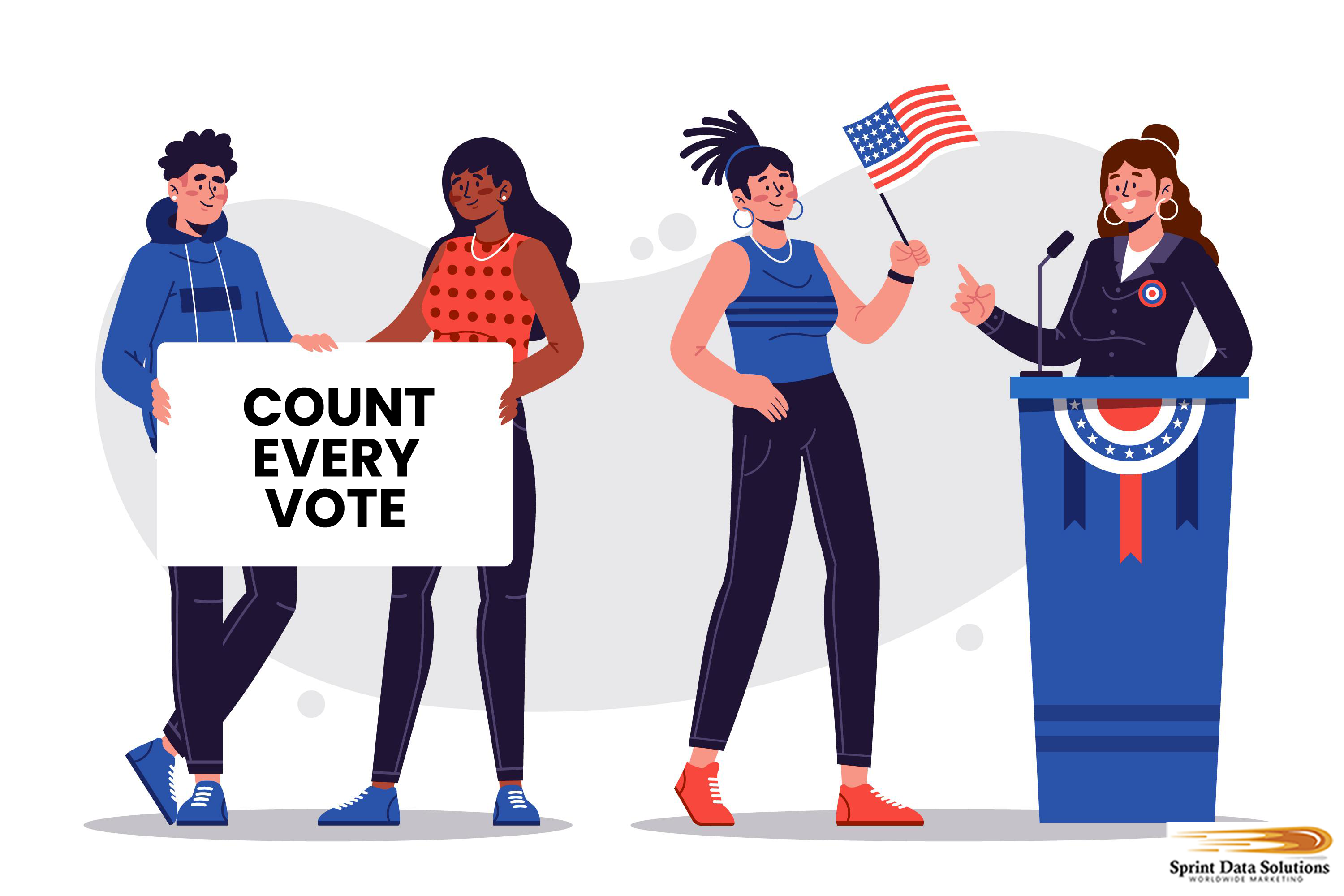
Elections Are Different In The New Millennium
The democratic process, particularly the strategies used to engage and persuade voters, has undergone significant transformation over the years. While the core objectives of political campaigns have remained largely unchanged, the methods of reaching and convincing voters have evolved, largely driven by advancements in communication technology. The rise of the Internet, social media, and data analytics has redefined how political candidates connect with voters, often rendering traditional methods less impactful. The ultimate goal of any campaign—convincing the electorate that a candidate is the best person for the job—remains unchanged. This involves not only establishing the candidate’s personal integrity and professional qualifications but also demonstrating their ability to enact meaningful change and advocate for the issues that matter most to their constituents.
Historically, campaigning was a localized and personal endeavor. Before mass media, candidates would personally visit key areas within their constituency, delivering speeches and engaging in direct conversations with voters. Print media, including posters, pamphlets, and newspapers, helped extend a candidate’s message, although these tools still had limited reach compared to today’s digital platforms. With the advent of radio in the early 20th century, political campaigns entered a new era. Radio allowed candidates to broadcast speeches and interviews to a national audience, vastly expanding their reach beyond local rallies. This innovation introduced the power of auditory persuasion and set the stage for even more expansive forms of communication.
Television brought a further revolution in the way campaigns were conducted. The visual element became critical in shaping public perception. Candidates no longer relied solely on speeches and written messages; they now had to manage their appearance, body language, and on-screen presence. Political ads began appearing on television, transforming the advertising landscape by making it possible to reach millions of voters in their homes. Presidential debates, televised live, became an essential part of the electoral process, offering voters an opportunity to see the candidates face-to-face and evaluate their readiness for office in real time.
In the late 20th and early 21st centuries, the rise of the Internet and social media added yet another layer of complexity and opportunity for political campaigns. Digital platforms like Facebook, Twitter, and Instagram allowed candidates to engage with voters in real-time, while data analytics enabled hyper-targeting of messages based on voter demographics, preferences, and behaviors. Campaigns began using data to not only tailor their messaging but also to mobilize supporters through online fundraising, petition drives, and get-out-the-vote efforts. Social media, with its viral nature, also allowed messages to spread quickly, sometimes bypassing traditional news outlets altogether.
Today, political campaigns continue to evolve as new technologies emerge. Artificial intelligence, machine learning, and advanced data analytics enable even more granular targeting of voters, allowing campaigns to personalize content for individuals based on their preferences, past behavior, and even social media activity. The internet has introduced a new era of interactive campaigning, where voters are not just passive recipients of information but active participants in the process, sharing content, commenting on candidates’ posts, and engaging in discussions that shape the conversation.
In summary, while the fundamental aims of campaigning—to establish credibility, present a clear platform, and promise change—have not changed, the tools and methods used to achieve these goals have evolved significantly. The shift from in-person interactions to radio, TV, and now digital and social media reflects broader societal changes, and as new technologies continue to emerge, political campaigns will likely continue to adapt and innovate to ensure that they reach and resonate with voters.
The rise of the Internet has revolutionized how campaigns are conducted, offering unparalleled access to data and enabling more precise targeting of audiences. The ability to collect vast amounts of information through online activities, such as creating user accounts, signing up for memberships, and tracking website interactions, has created highly detailed profiles of individuals. These profiles include personal preferences, behaviors, and consumption patterns, which are often shared among businesses, organizations, and data brokers to refine marketing strategies. This wealth of data allows companies to deliver tailored content and offers with remarkable accuracy, improving engagement and conversion rates.
Moreover, the way content is consumed has transformed dramatically. Unlike the traditional methods where audiences had to tune in to specific radio stations or TV broadcasts at scheduled times, the Internet has made it possible for people to access content on-demand, whenever and wherever they choose, as long as they have an Internet-capable device, such as a smartphone, tablet, or laptop. This flexibility has created an environment where content can be consumed at the user’s convenience, disrupting traditional media models and providing more opportunities for interactive and personalized marketing. The Internet’s reach and data-driven insights have reshaped the landscape, offering businesses the tools to engage with consumers in ways that were previously unimaginable.
Who Benefits
Sprint Worldwide Solutions Marketing offers an expansive array of meticulously curated contact lists, designed to serve diverse business and organizational needs. These lists encompass a broad spectrum, from individual consumers to businesses across various industries, ensuring that every client can target the most relevant audience for their marketing efforts. In addition to commercial data, Sprint Worldwide Solutions Marketing also provides highly specialized lists for the political arena, capturing not only personal contact information but also key insights into potential political action and advocacy groups. This detailed data allows for precision-targeted outreach, whether for campaigns, voter engagement, or other forms of political mobilization. Available lists include, but are not limited to: consumer demographics, business executives, industry-specific contacts, and politically engaged individuals or organizations—each list optimized for a variety of communication channels. Some of the lists available include:
Registered Voter Mailing Lists
The foundation of American democracy is built upon the active participation of its citizens in the voting process. In many states, registering to vote is a proactive step that citizens must take before they can cast their ballots, while in others, same-day voter registration is an option. Whether voters are required to affiliate with a political party such as Republican, Democrat, or Independent varies by state, with some states offering a more flexible approach to registration.
Regardless of whether individuals choose to identify with a particular political party or remain independent, the simple act of registering to vote signifies a commitment to participating in the democratic process. This act of civic engagement is essential, as it not only allows individuals to have a say in elections but also positions them as more likely to be receptive to political outreach. By registering, voters demonstrate their interest in being involved in the political landscape, making them an important demographic for political marketing efforts. This elevated level of engagement creates opportunities for more effective targeting and outreach by political campaigns, advocacy groups, and other organizations involved in shaping public policy.
State Voters Mailing Lists
While the presidency often dominates the national stage, state-level elections have a much more direct and immediate impact on people’s lives. From choosing the governor to electing state senators and representatives, these elections shape the policies that affect everything from local schools and healthcare to infrastructure and tax rates. State lawmakers are responsible for crafting legislation that touches nearly every aspect of daily life, including public safety, education, and the economy.
State elections are crucial because they determine the individuals who will make key decisions on laws, budgets, and policies within each state. These elected officials hold significant power over issues such as environmental regulations, labor laws, and healthcare access. Because the decisions made at the state level directly influence voters’ daily experiences, it is critical to engage with the electorate during campaign seasons. Outreach efforts can help voters understand the stakes of these elections and how their choices will shape the future of their communities. By focusing on state elections, candidates can create a more immediate connection with voters, stressing the importance of local governance and policy in their everyday lives.
National Voter Mailing Lists
In political marketing, reaching a broad audience is essential, especially for large-scale elections like the U.S. Presidential race or national political movements that have federal-level implications. To maximize impact, utilizing national voter mailing lists can be an effective strategy, ensuring that messaging is delivered to a vast number of eligible voters across diverse demographics and geographic regions. These lists provide access to critical voter data, including party affiliation, voting history, and other factors that can help political campaigns tailor their messages. For political activities with federal-level concerns, a comprehensive, national reach is necessary to engage constituents, raise awareness, and mobilize support effectively. This kind of targeted outreach can drive voter participation, influence key issues, and create a widespread presence in every corner of the nation.

Voter Precinct Mailing Lists
Voting precinct mailing lists are invaluable for political campaigns and grassroots political actions. These lists provide targeted contact details of individuals eligible to vote in specific subdivisions within an electoral district. Such lists are particularly essential when campaigns aim to engage directly with voters at the local level, where political messages can have the most immediate and personal impact.
Precinct-level data allows political organizations to tailor their messaging to specific geographic areas, ensuring that outreach efforts are both relevant and effective. For any election—be it local, state, or federal—understanding the voting demographics and being able to contact eligible voters in specific precincts is critical. Precinct mailing lists enable campaigns to efficiently allocate resources, whether for canvassing, direct mail, or other forms of communication, ensuring they reach the most relevant voters at the right time.
Moreover, these lists can provide valuable insights into voting patterns, party affiliations, and demographic information, further enhancing the precision of targeted outreach. By leveraging this data, political entities can focus on high-priority precincts, customize their messaging for local concerns, and engage in voter mobilization efforts that drive turnout and influence outcomes.
In summary, precinct mailing lists are a powerful tool for political action, helping campaigns and organizations connect with voters at the ground level, boost engagement, and ensure that key messages reach the right audience in crucial voting areas.
Political Donor Mailing List
Beyond merely fulfilling their civic responsibility by voting for government officials, many individuals feel a strong sense of duty to engage further in the political process by financing political campaigns. Political campaigns require substantial financial backing to reach voters, promote their messages, and run effective advertisements. This is where political donations become crucial, with Americans from various backgrounds contributing to the financial engine that powers these campaigns.
Donors span a broad spectrum of socioeconomic backgrounds, with contributions coming from individuals at every income level. For many lower-income Americans, donating to a candidate or cause they believe in represents a significant personal sacrifice, but one they make out of a strong commitment to the cause. Middle-class donors often support candidates or initiatives that align with their values, whether it’s advocating for social issues, healthcare reform, or environmental policies. Their donations, while smaller in comparison, still play a vital role in fueling grassroots movements and ensuring that a diverse array of voices is heard in the political arena.
On the other end of the spectrum, high-net-worth individuals, often referred to as the “big fish” in political donations, contribute much larger sums. These affluent donors may not only be motivated by political ideology but also by the desire for tangible returns on their investments. Such returns may include influencing policies that directly benefit their business interests, supporting candidates who share their vision, or promoting changes in laws that impact their wealth and lifestyle. For the wealthiest Americans, political donations can serve as both an act of civic engagement and a strategic move to protect or expand their financial interests.
Overall, political donations reflect the diverse ways in which Americans participate in democracy. Whether from those making small sacrifices or large-scale benefactors seeking influence, each contribution helps shape the landscape of political campaigns and ensures that the voices of citizens from all walks of life are heard.
Conservative Political Donors
In the context of American politics, the division between two dominant political parties—Republicans and Democrats—has led to distinct donor bases aligned with the values and priorities of each party. Conservative donors, who typically identify with the Republican Party, are often motivated by specific ideological principles and social values. These donors tend to support causes such as a strong stance on gun rights, a belief in the role of Christian faith in public life, a desire for stricter immigration policies, and limited government intervention in economic matters. For these individuals, political activities that reflect these core values are not just important—they are an expression of their vision for the country’s future.
Conservative donors are an essential resource for political campaigns, advocacy groups, and organizations that share these ideals, particularly during crucial election periods. These donors, who may also support organizations advocating for lower taxes, national security, and traditional family values, can often be persuaded to contribute generously to political causes that align with their worldview. Additionally, their contributions help fuel grassroots campaigns and support the candidates who advocate for policies that resonate with their beliefs. Engaging conservative donors is especially valuable for campaigns looking to mobilize voters who support limited government, constitutional freedoms, and other conservative principles. Their financial backing plays a crucial role in shaping the political landscape and ensuring that conservative messages are amplified across various media and political forums.
Liberal Political Donors
Liberal causes have long played a significant role in shaping American politics, with many of these issues finding a natural home within the Democratic Party. These causes often focus on advancing social justice, protecting civil liberties, and advocating for policies that support marginalized communities. In recent years, liberal movements have gained increased momentum, driven by a combination of emerging social challenges and the perception that core values are being threatened. These causes, which include expanding abortion access, safeguarding LGBT rights, improving healthcare, promoting racial equality, and strengthening education systems, continue to resonate with a broad segment of the population.
The political landscape has shifted considerably, especially with the controversial reversal of Roe v. Wade, a landmark decision in the fight for reproductive rights. This decision has mobilized a significant portion of the electorate, particularly individuals who advocate for gender equality and women’s health. As a result, liberal donors have become more engaged than ever, with many seeking to support political candidates and organizations that align with their values. The increased interest in funding these causes demonstrates a growing awareness of the importance of policy decisions on civil rights and social justice issues.
In addition to reproductive rights, issues like climate change, gun control, healthcare reform, and racial justice have gained considerable traction among liberal donors. Many see these challenges not as isolated issues, but as interconnected struggles that require systemic change. This has led to increased activism and political contributions, particularly from younger generations who view these issues as integral to their future. Nonprofits, political action committees (PACs), and advocacy groups now find themselves with more resources to push for policy reforms that reflect the needs of diverse communities.
As these causes gain visibility and prominence, the alignment of liberal political donors with candidates and organizations that support these progressive agendas has never been stronger. Through targeted fundraising and mobilization efforts, liberal causes are successfully attracting attention and generating support. This new wave of activism reflects a heightened sense of urgency and a determination to advocate for the values that define the future of American society.
Independent Voter Mailing List
While most Americans traditionally register to vote with one of the two major political parties, a growing number of voters prefer to base their political decisions solely on policy rather than party affiliation. These independent voters are not bound by party lines and are often more focused on specific issues that directly impact their lives, such as healthcare, the economy, education, or the environment. They tend to support candidates or parties that align with their personal values and policy preferences, regardless of party affiliation.
Although independent voters are often excluded from party primaries, where they can’t participate in the nomination of presidential candidates, they can still be a powerful force in general elections, particularly in swing states or close races. Their support can often determine the outcome of elections, as they are frequently undecided until the policies and platforms of candidates are fully presented. Additionally, these voters can play a crucial role in fundraising and donations, as many candidates see the potential for garnering significant support from independent voters if their policies resonate. For organizations and political campaigns, connecting with independent voters requires a deep understanding of their concerns and crafting messaging that highlights compatible policies, offering solutions to the issues that matter most to them. This makes independent voters a unique and vital demographic in any election cycle, as their decisions are less predictable and more responsive to specific policy proposals.
Undecided Voters Mailing List
Undecided voters are often a critical demographic in elections, yet they tend to be overlooked by many political campaigns. These individuals are not disengaged from the voting process; rather, they remain open to persuasion and have not yet committed to a particular candidate or party. Their votes can be the deciding factor in tight races where there is no clear front-runner, making them essential to focus on in the final stretch of a campaign. While undecided voters may appear difficult to sway, the effort to engage them should not be underestimated. Research has shown that, with the right message, these voters are often willing to listen and engage in discussions that might shift their decision. The key to winning over undecided voters lies in targeted, thoughtful communication that addresses their concerns and provides clear reasons why a particular candidate or party aligns with their values. As history has demonstrated in several elections, even small shifts in the undecided voter pool can result in dramatic changes in electoral outcomes. Given this, campaigns should invest time and resources in appealing to this group, as their decisions often carry more weight than anticipated.
Political Activists Mailing Lists
Political activists play a vital role in shaping political landscapes by going beyond the traditional contributions of voting or financial support. These individuals are deeply passionate about their causes, often committing substantial time, energy, and effort to advance their ideals. Their contributions can take many forms, from grassroots organizing and canvassing to working behind the scenes in administrative roles, such as coordinating events or managing communications. In addition to these, activists may take more visible actions, such as participating in protests, rallies, or demonstrations, where their presence sends a powerful message to lawmakers and the general public.
The significance of political activists increases particularly during election periods, where they become a crucial force in mobilizing voters, rallying support, and raising awareness for candidates and causes. Their engagement is not only driven by personal belief but by a sense of duty to advocate for systemic change, social justice, and better governance. In many cases, activists help amplify the voices of marginalized communities or underrepresented groups, bringing attention to important social, economic, and political issues. By leveraging their networks and influence, activists can build momentum for movements, ensuring that the causes they support gain visibility and traction, making them indispensable allies in any political struggle.
Swing State Voters
At the federal level, one of the most pivotal demographics in determining the outcome of a Presidential election is “swing state voters.” These are voters in states that do not consistently lean towards one political party and can swing between parties depending on the election cycle. Unlike states like California, which traditionally votes Democrat, or Texas, which is reliably Republican, swing states are unpredictable and can change allegiance based on various factors, such as voter turnout, political trends, or issues that dominate the national discourse. These states—often referred to as battleground states—include regions like Florida, Pennsylvania, Ohio, Wisconsin, and Michigan, among others.
Swing states are crucial in shaping the Electoral College, which ultimately decides the presidency. These states often receive the most attention during election seasons, with candidates focusing much of their campaign resources, advertisements, and time on persuading voters in these areas. The tight competition and high level of uncertainty in these states make them key battlegrounds where elections are won or lost.
For political campaigns and marketing efforts, having a precise and up-to-date database that covers these swing states is invaluable. With the dynamic nature of these regions, where demographic shifts, local issues, and national trends can drastically alter voting patterns, targeted outreach and strategy become critical. Effective use of swing state data, whether through direct mail, email marketing, or voter mobilization efforts, can significantly impact campaign success. Building and maintaining robust databases on swing state voters enables campaigns to refine their strategies and reach voters with the most relevant messages at the most opportune times. As federal-level political activities intensify in these regions, knowing how to navigate and target these demographics becomes not just an advantage but a necessity for securing victory.
A New Election Is Coming
In the United States, the next presidential election is set for November 2024, but now is the time when political campaigns need to begin their groundwork. While the election date may seem distant, experienced political organizations understand the importance of starting preparations early. Early planning, organizing, and outreach can significantly impact the effectiveness of a campaign when the time comes. Being proactive in building relationships with voters, identifying key issues, and developing targeted strategies gives campaigns a distinct advantage in swaying public opinion. This is where Sprint Data Solutions Worldwide Marketing stands out. By offering comprehensive multichannel voter contact lists, Sprint Data Solutions ensures political campaigns can connect with constituents at every level, whether local, regional, or national. With access to meticulously curated voter data for each district across the USA, campaigns can engage voters with precision, tailoring messaging to specific demographics and key battleground regions. Sprint Data Solutions not only offers the tools to reach voters but also the expertise to help campaigns act decisively, making every outreach effort count and driving voter engagement from the start of the election cycle.
Reach The Groups You Need
Sprint Data Solutions Worldwide Marketing offers an extensive collection of voter and political contact information, which goes beyond basic contact details to include valuable demographic insights. This data is gathered from various reliable sources, including surveys, purchase actions, and extensive mailing lists. Through advanced data acquisition methods and continuous updates, Sprint Data Solutions ensures that this information remains relevant and accurate, making it an invaluable resource for political campaigns.
Leveraging cutting-edge big data analytics and categorization techniques, this data can be sorted, segmented, and cross-referenced to help political candidates and organizations precisely target the voters that matter most. The data can be customized and filtered according to specific needs, allowing campaigns to access highly focused segments of the electorate.
Using technology and strategic data compilation, candidates can gain deeper insights into diverse demographics, allowing them to tailor their outreach efforts effectively. These segments are often categorized by factors such as:
- Ethnicity
- Age
- Children’s Age
- Debt
- Homeowner
- Renter
- Marital Status
- Income
- Veteran Status
- Geography
- Mortgage Data
And more.
At Sprint Data Solutions Worldwide, we understand the importance of reaching the right voters, activists, and donors with the most effective communication strategies. Voting lists are no longer limited to just physical mailing addresses—voters can be targeted through multiple channels, including direct mail, email, text/SMS messaging, and telephone. Whether you’re running an election campaign, organizing volunteers, or seeking donors, we offer highly targeted voter mailing lists that can be tailored to specific demographics. By focusing on key factors like age, location, political affiliation, and even past voting behavior, we help maximize the impact of your outreach efforts. With our comprehensive and up-to-date database, we provide the precise targeting you need to boost engagement and improve the chances of a successful election or fundraising campaign. Let Sprint Data Solutions Worldwide be your trusted partner in securing the voter contact lists you need for a winning strategy.